





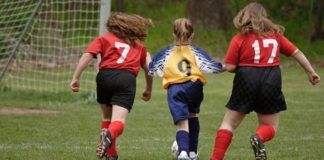


kids exercise

Lifelong exercise holds key to cognitive well-being
Lifelong exercise holds key to cognitive well-being March 21, 2013 (1 votes, average: 5.00 out of 5)

A study by researchers at King’s College London highlights a link between lifelong exercise and improved brain function in later life. The study found that regular intensive lifelong exercise as a child and adult improved cognitive functioning at the age ... Read More »

Short bouts of exercise boost self control
Short bouts of exercise boost self control March 17, 2013 (1 votes, average: 5.00 out of 5)

Short bouts of moderately intense exercise seem to boost self control, indicates an analysis of the published evidence in the British Journal of Sports Medicine. The resulting increased blood and oxygen flow to the pre-frontal cortex may explain the effects, ... Read More »

Improved Kids’ Health Check to begin
Improved Kids’ Health Check to begin March 15, 2013 (1 votes, average: 5.00 out of 5)

The Australian Government is providing $11 million over five years for the expanded Medicare Healthy Kids Check, to give parents the option of talking to a medical professional about health and wellbeing issues they’re concerned about. Mr Butler said issues ... Read More »

Fight against child obesity gets a technological boost
Fight against child obesity gets a technological boost February 28, 2013 (2 votes, average: 5.00 out of 5)

Cutting-edge mapping technology is being used to tackle child obesity in South Australia by pinpointing communities across the state with poorer health outcomes. The Geographic Information System (GIS) technology from industry leaders Esri Australia is being used by South Australia’s ... Read More »

E-Games boost physical activity in children
E-Games boost physical activity in children January 14, 2013 (1 votes, average: 5.00 out of 5)

Video games have been blamed for contributing to the epidemic of childhood obesity in the United States. But a new study by researchers at the George Washington University School of Public Health and Health Services (SPHHS) suggests that certain blood-pumping ... Read More »

Exercise program helps pediatric cancer survivors regain physical strength
Exercise program helps pediatric cancer survivors regain physical strength January 7, 2013 (0 votes, average: 0.00 out of 5)

There are many health effects that a patient may need to overcome after winning a battle against cancer. Cancer treatments can affect the patient’s balance, agility, coordination, prompt weight gain and other physical ailments. At Nationwide Children’s Hospital, beating cancer ... Read More »

New health and physical education curriculum to promote healthy lifestyles for children
New health and physical education curriculum to promote healthy lifestyles for children January 4, 2013 (1 votes, average: 5.00 out of 5)

The Australian Curriculum, Assessment and Reporting Authority (ACARA) has released the draft Australian Curriculum: Health and Physical Education for consultation through 12 April 2013. Taking a strengths-based approach, the draft curriculum proposes that students should learn how to live a ... Read More »

Salt a new target for reducing obesity in children
Salt a new target for reducing obesity in children December 28, 2012 (1 votes, average: 5.00 out of 5)

Salt may be lurking as a silent contributor to the growing childhood obesity epidemic, Deakin University health researchers have found. In a study of more than 4,200 Australian children, the researchers with Deakin’s Centre for Physical Activity and Nutrition Research ... Read More »

Preschool movement skills programs could lead to life-long benefits
Preschool movement skills programs could lead to life-long benefits December 15, 2012 (1 votes, average: 5.00 out of 5)

Preschools could hold the key to kids developing a life-long interest in physical activity. Researchers with Deakin University’s School of Health and Social Development, with colleagues from Northern NSW Local Health District, evaluated a movement skills program run by NSW ... Read More »

Medication use higher among obese kids
Medication use higher among obese kids October 21, 2012 (0 votes, average: 0.00 out of 5)

Overweight children are far more likely to take prescription medications than children of a normal weight—a trend that adds to already higher health-care costs for treating childhood obesity, according to new research from the University of Alberta. Researchers from the ... Read More »


close

Join our FREE monthly Newsletter!

Simply enter your email and first name below:

Parenthub respects your privacy. You can unsubscribe from the newsletter at any time.
Please read our Terms of Use and Privacy Policy.